A comfortable home provides more than food, water, and a warm place to sleep. Cats also need opportunities to climb, hide, scratch, explore, play, hunt, rest, and make choices about how they interact with their environment.
These opportunities are collectively known as environmental enrichment. Enrichment supports a cat’s physical and emotional wellbeing by allowing them to express natural behaviors in safe and appropriate ways. It can also help reduce Fear, Anxiety, and Stress (FAS), a term used to describe the emotional responses a cat may experience when they feel threatened, uncertain, frustrated, or unable to cope with a situation.
Creating an enriching home does not require elaborate renovations or expensive cat furniture. A Fear Free home begins with understanding your individual cat, recognizing what they communicate, and providing options that fit their preferences, abilities, and personality.
Start With Safety and Security
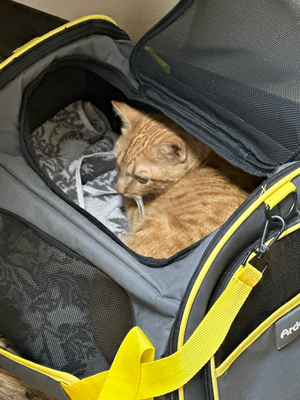
Every cat should have access to quiet, comfortable places where they can rest without being approached or disturbed. These might include a covered bed, open carrier, cardboard box, closet shelf, elevated perch, or quiet room.
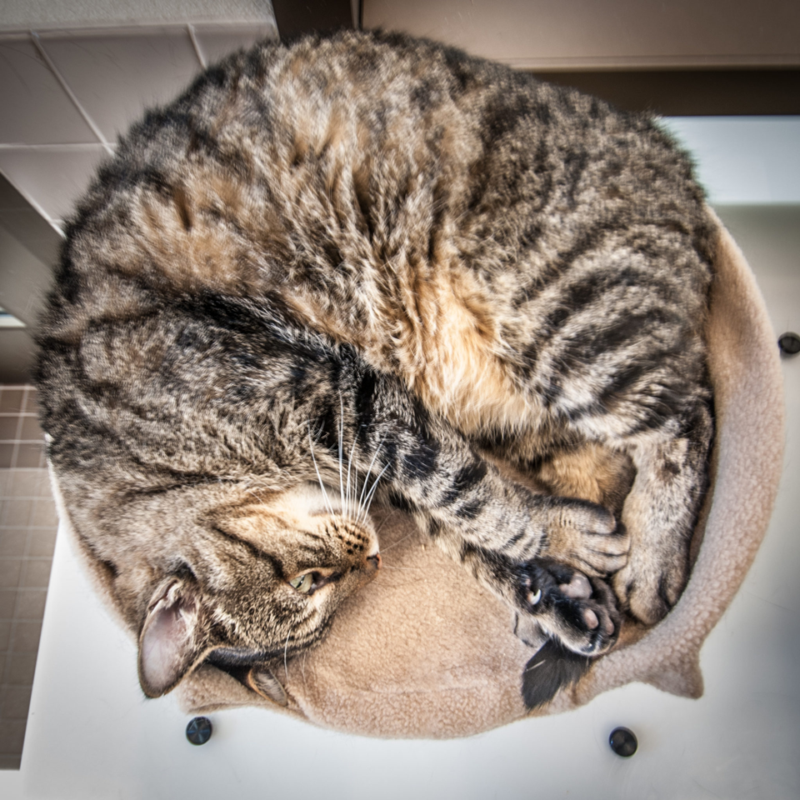
Some cats prefer to hide near the floor, while others feel safer up high. Offering both options gives your cat greater choice and control over where they spend their time.
Safe spaces are especially important during potentially stressful events, such as visitors, loud noises, home repairs, changes in routine, or the arrival of a new pet. When your cat retreats, allow them to remain there. Reaching in or pulling them out can increase FAS and make the space feel less secure. Respecting their decision to create distance shows your cat that their communication works.
Consider leaving your cat’s carrier open in a familiar area with comfortable bedding and occasional treats inside. Instead of appearing only before a veterinary visit, it can become a familiar resting place and build positive associations with the carrier.
Think Vertically
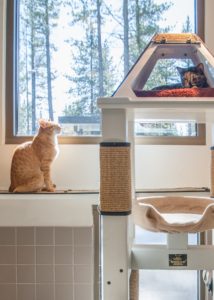
Cats experience a home in three dimensions. Elevated spaces allow them to observe their surroundings, avoid unwanted interactions, and rest where they may feel more secure.
Vertical options can include:
- Cat trees or towers
- Window perches
- Sturdy shelves
- Cleared sections of a bookcase
- Stable furniture
- Steps or ramps for cats with limited mobility
Make sure elevated surfaces are stable, easy to access, and covered with material that provides good traction. A surface that shifts or feels slippery may increase FAS and discourage your cat from using it.
Adapt the environment to your cat’s abilities. Senior cats, kittens, and cats with arthritis or mobility limitations may need lower platforms, ramps, or closely spaced steps.
In a multi-cat home, provide multiple elevated areas with more than one way up and down. A perch with only one exit can allow another cat to block access or trap a cat in place.
Make Time for Predatory Play
Cats are hunters, even when their meals arrive in a bowl. Interactive play provides an appropriate outlet for stalking, chasing, pouncing, and capturing.
Use a wand-style toy to imitate prey. Rather than waving it directly in your cat’s face, move it away from them, around corners, or underneath lightweight objects. Let it pause before darting away again.
Allow your cat to catch the toy periodically. A play session in which the “prey” can never be captured may become frustrating. Ending with a small meal or treat can help complete the natural sequence of hunt, catch, eat, groom, and rest.
Your cat may prefer toys that fly through the air, scurry along the floor, make noise, or disappear underneath a blanket. Experiment to discover what they enjoy, and rotate toys to help keep them interesting.
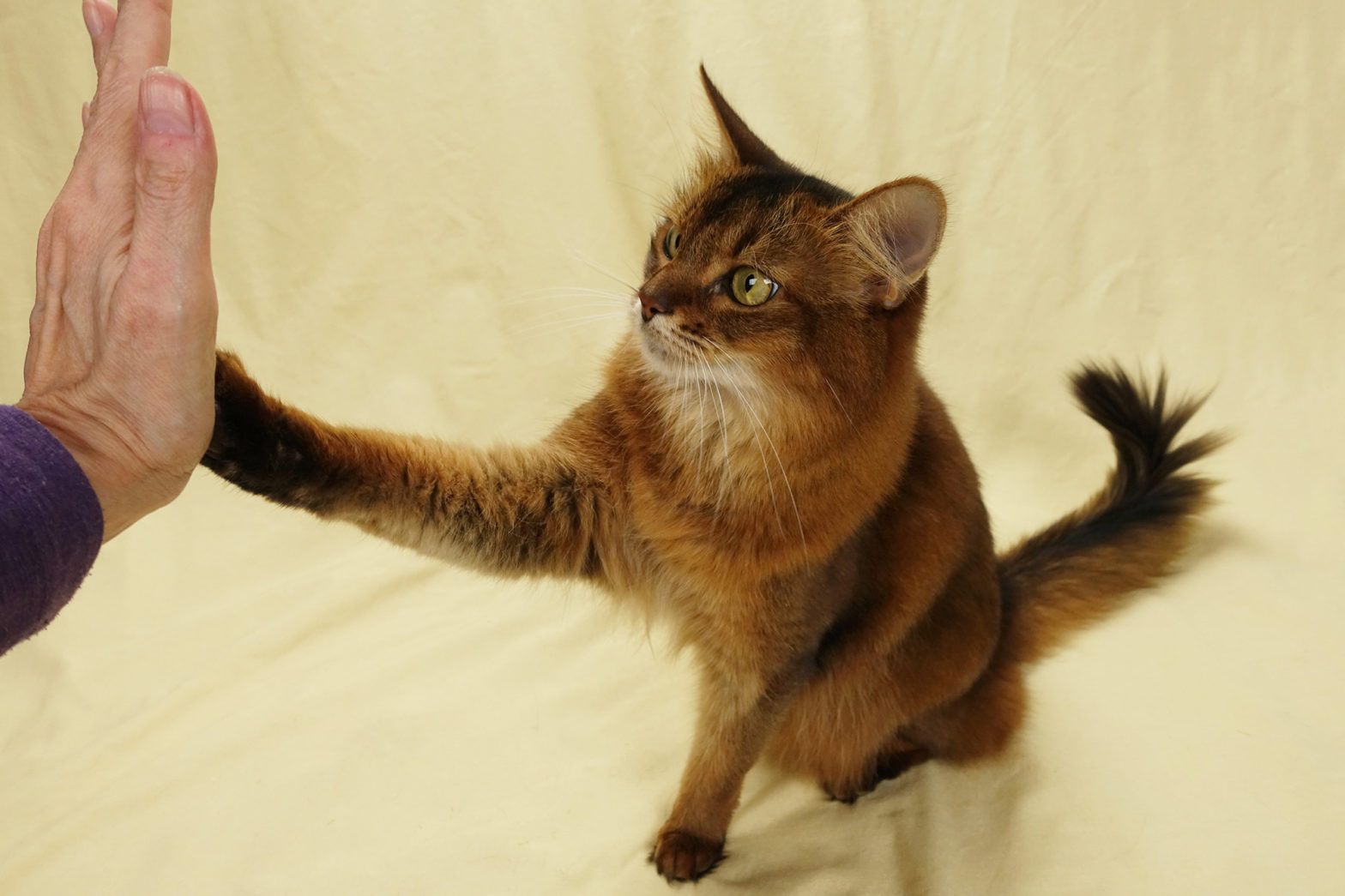
Many cats prefer several short play sessions to one long session. Even five minutes of focused play can be valuable. Allow your cat to decide whether to participate and when to stop.
Never use your hands or feet as toys, and store string, ribbon, yarn, feathers, and wand toys safely after play. These items can cause serious injuries if swallowed.
Turn Mealtime Into Enrichment
Cats naturally work for their food and typically eat several small meals throughout the day. Feeding enrichment can bring some of that mental and physical activity into the home.
Try:
- Puzzle feeders
- Treat-dispensing toys
- Lickable treats spread across a textured mat
- Small portions of food hidden in different locations
- Pieces of kibble tossed individually for your cat to chase
- Simple food puzzles made from safe cardboard containers
Introduce food puzzles gradually. Begin with an easy option that allows your cat to see and access the food. Once they understand the activity, slowly increase the challenge. A puzzle that is too difficult may create frustration instead of enrichment.
Favorite foods can also help create positive associations with experiences your cat finds challenging, such as approaching the carrier or participating in brief handling exercises. However, food should never be used to lure a frightened cat closer to something they are trying to avoid.
Include food used for enrichment in your cat’s normal daily amount, particularly if weight management is a concern.
Provide Places to Scratch
A sturdy window perch can provide changing sights, sounds, and smells by allowing your cat to watch birds, insects, people, or leaves moving outside.
A secure catio, or enclosed outdoor space designed for cats, can offer even more sensory enrichment while protecting your cat from traffic, predators, parasites, toxins, and other outdoor hazards. Catios can range from small window enclosures to larger structures with shelves, ramps, scratching surfaces, hiding areas, and places to rest.
Make sure the catio is fully enclosed, escape-resistant, and protected from extreme temperatures. Provide shade, fresh water, comfortable resting areas, and an easy route back indoors. Allow your cat to explore at their own pace rather than forcing them into the space or blocking their return to the home.
Pay attention to how your cat responds to outdoor sights and sounds. Watching wildlife is entertaining for many cats, but it can be frustrating or upsetting for others. Dilated pupils, flattened ears, a rapidly lashing tail, persistent vocalizing, or difficulty settling afterward may indicate that the experience is increasing arousal rather than providing enjoyable enrichment.
Cats may also enjoy cat-safe plants and scents, such as cat grass, catnip, or silver vine. Confirm that any plant brought into your home or catio is safe for cats. Lilies and many other common plants can be dangerously toxic.
Avoid using essential oils, air fresheners, or heavily scented products as enrichment. Cats have a highly sensitive sense of smell, and some of these products can be unpleasant or harmful.
Recognize FAS and Respect Your Cat’s Choices
Enrichment is not enriching if your cat finds it overwhelming, frustrating, or frightening. Cats often communicate discomfort subtly, so recognizing early signs of FAS allows you to pause before their response escalates to hissing, swatting, biting, or fleeing.
Early signs may include:
- Turning the head or body away
- Crouching, leaning away, or freezing
- Dilated pupils
- Ears rotating to the side or back
- A twitching or swishing tail
- Suddenly refusing treats
- Retreating or hiding
If you notice these signs, stop the activity and give your cat space. Think about how the experience could be made easier next time. Introduce new toys, objects, sounds, and activities gradually, and make sure your cat always has a clear way to move away.
Whenever it is safe and practical, allow your cat to decide whether to interact, where to rest, which activity to pursue, and when an interaction ends. Respecting these choices builds trust and helps prevent FAS from escalating.
Distribute Resources in Multi-Cat Homes
Enrichment cannot compensate for an environment in which a cat feels unsafe accessing essential resources. Cats need comfortable and conveniently located places to eat, drink, eliminate, scratch, rest, and hide.
In a multi-cat home, distribute these resources throughout the house rather than grouping them in one location. Each cat should be able to access what they need without being watched, followed, or blocked by another cat.
Cats who live together do not necessarily want to share. Providing multiple, separated resources can reduce competition and subtle tension.
Let Your Cat Be Your Guide
Good enrichment is not measured by how many toys you buy or how elaborate your home looks. It is measured by how your cat responds.
Look for relaxed body language, curiosity, voluntary participation, and the ability to disengage and settle afterward. Make changes gradually, provide predictable routines, and introduce only one or two new experiences at a time.
Sudden withdrawal, reduced activity, changes in play, increased hiding, house-soiling, irritability, or loss of interest in favorite activities should not automatically be dismissed as boredom. These changes can also indicate pain or illness and warrant a conversation with your veterinarian.
The goal is not to keep your cat entertained every moment of the day. Cats also need predictability, uninterrupted sleep, and quiet time. A thoughtfully enriched, Fear Free home gives your cat opportunities to make choices, feel secure, and engage in the natural behaviors that help them thrive.
If they’re lucky and have good, stable homes, a cat may spend years in the same house, day after day. While you can do a lot for your cats by playing with them, loving them, and caring for them, what about the times when you’re not home? Imagine how bored your cats may be! Let’s make our cats’ homes more interesting by:
- Building something interesting such as a modular climbing wall that allows for hanging perches and boxes.
- Creating some visual stimulation with bird feeders and butterfly-attracting plantings just outside your windows. (Note: Some cats become frustrated if they can see birds and butterflies but are unable to get to them. They may become agitated instead of relaxed and redirect their aggression to a person or other animal in the house. Pay attention to their behavior and remove the perch or feeder if your cat becomes upset.) If your cat is interested in TV, leave it on occasionally as well. We don’t recommend leaving TV on all the time, as cats also need quiet time and restful sleep!
- Create a safe, outside window box, or catio to allow your cats a much more interesting space where they can explore with all five senses.
About the author:
Tanya is a lifelong feline lover and proud cat mom to a lively crew of more than ten cats. As Director of Marketing at Fear Free, she combines her passion for cats with her professional expertise to help advance Fear Free’s mission of reducing Fear, Anxiety and Stress (FAS) in pets and improving the veterinary and pet care experiences for animals and the people who care for them.